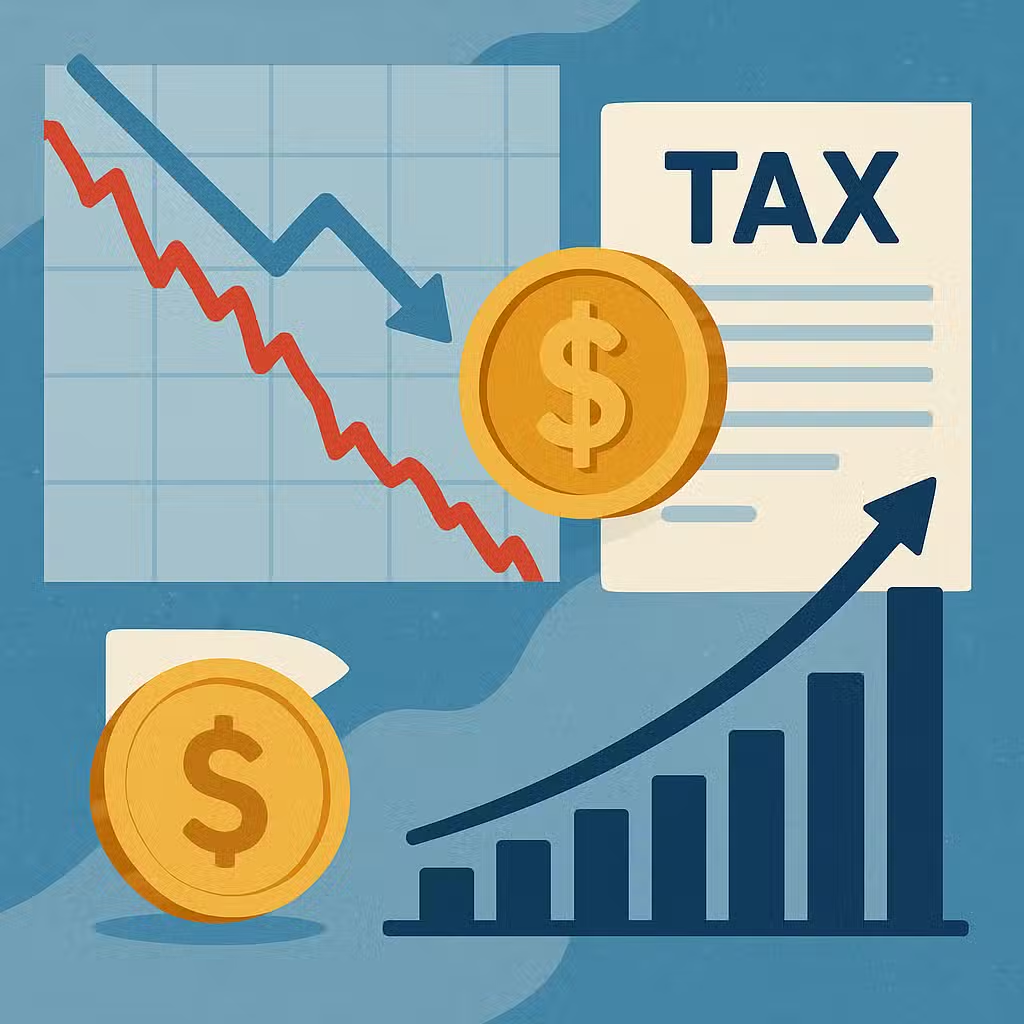
Market Downturn Offers Investors Strategic Tax Benefits to Strengthen Long-Term Portfolios
Imagine your investment portfolio like a garden. Sometimes, storms roll in and damage some plants, but with a little work, you can still grow something good. That’s what happens when markets get rocky—there are ways to make the most of tough times.
Why This Matters for Investors
When war breaks out in the Middle East, it’s like a strong wind shaking the market garden. Oil prices shoot up, and stock prices can drop fast. Since late February, the S&P 500 has fallen over 4%, and oil prices have jumped nearly 40%. The Dow even slipped into correction territory, which means it dropped 10% from a recent high. With elections coming up, more ups and downs are likely.
For investors, this matters because it can affect your portfolio’s value, the health of different sectors (like energy or tech), and your long-term plans. But with the right moves, you can even use these rough patches to your advantage.
Bull Case: Opportunities in a Down Market
- Roth Conversions: When your investments are down, you can move more shares from a regular IRA to a Roth IRA for the same tax cost. When the market bounces back, your gains grow tax-free in the Roth.
- Tax-Loss Harvesting: Selling losing investments can lower your tax bill by offsetting gains elsewhere. If your losses are bigger than your gains, you can use up to $3,000 against your regular income and carry the rest forward.
- Rebalancing for Less: If one stock or sector dropped a lot, you can sell some and buy others at a lower tax cost, helping keep your portfolio balanced.
- Employee Stock Options: If you have stock options at work, exercising them during a downturn may mean a smaller tax bill, since the gap between what you pay and the stock’s value is less.
Bear Case: Risks and Challenges
- Tax Traps: Converting too much to a Roth IRA at once can push you into a higher tax bracket or raise your Medicare costs later.
- Wash Sale Rule: If you sell a losing investment and buy it back within 30 days, you can’t claim the loss on your taxes. Be careful with timing.
- Long-Term Bond Risk: Long-term bond funds have lost value lately, and with inflation and interest rates unclear, they may not be safe bets for now.
- Company-Specific Risk: Exercising stock options is a big bet on your employer’s future. If the company struggles, your shares could lose even more value.
Extra Insight and Data
According to Morningstar, Roth conversions work best in years when your income (and tax rate) is lower than usual. Historically, after every major market drop since 1980, the S&P 500 has recovered and hit new highs within a few years. This means using downturns for smart moves can pay off for patient investors.
Investor Takeaway
- Look for Roth Conversion Chances: If the market is down and you believe in a rebound, talk to your advisor about moving some IRA funds to a Roth.
- Harvest Tax Losses: Review your portfolio for losing investments you can sell to lower your tax bill.
- Rebalance Carefully: Use market dips to adjust your investments, but watch out for tax impacts and the wash sale rule.
- Be Smart with Stock Options: If you have employee stock options, ask a tax pro if this is a good time to exercise them.
- Stay Calm and Plan Ahead: Volatility is normal, and history shows markets usually recover. Use downturns to strengthen your long-term plan, not panic.
For the full original report, see CNBC