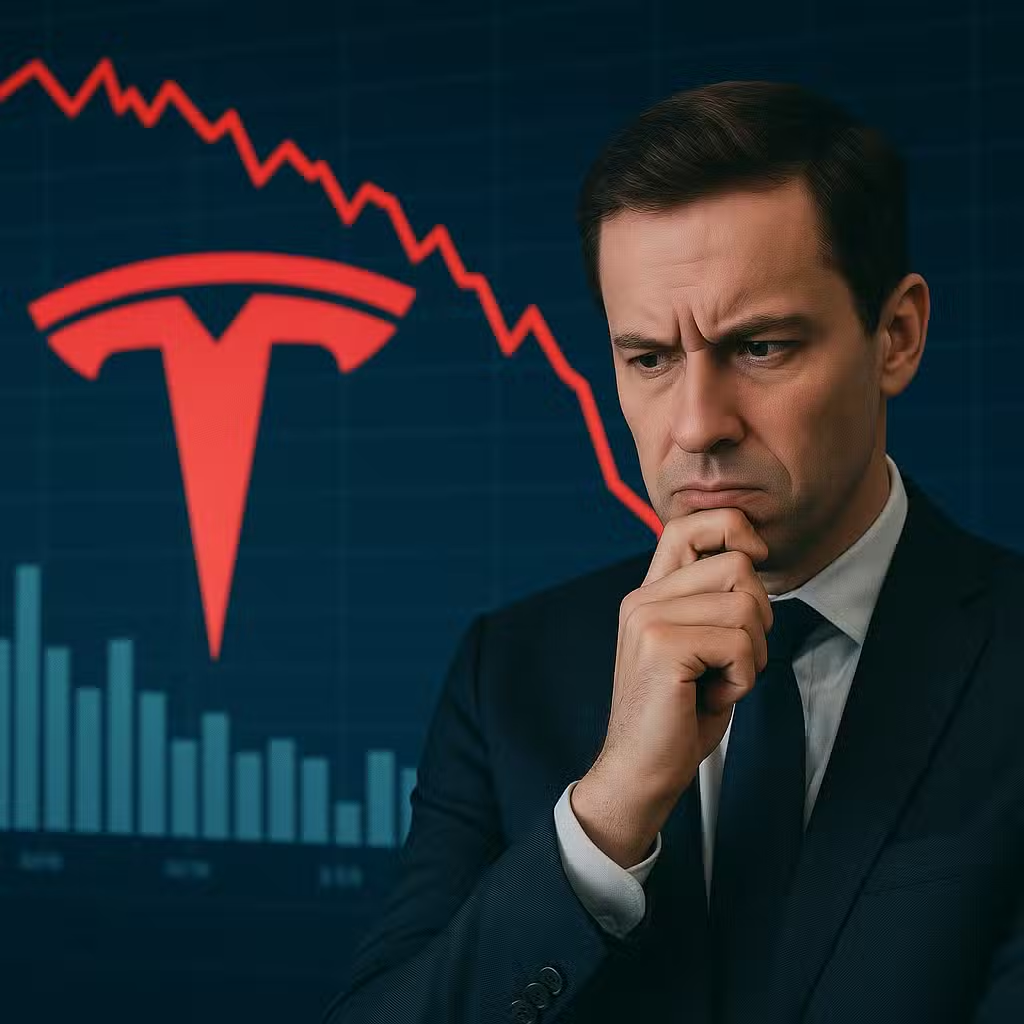
Tesla Investor Confidence Wavers, Raising Questions About Future Stock Performance
Imagine you’re playing a game of musical chairs, but suddenly, someone removes a few chairs and the music slows down. That’s a bit like what’s happening with Tesla’s stock right now — things are changing, and investors need to pay attention.
Why This Matters for Investors
Tesla has been a favorite for investors who believe in electric cars and Elon Musk’s vision. For a while, buying Tesla stock felt like a winning move, no matter the price. But now, things are shifting, and it’s important for investors to understand why.
The Good News: Why Bulls Still Believe
- Big Growth Hopes: Tesla is still worth about $1.5 trillion, making it bigger than most car companies combined.
- Innovation Leader: Many people still trust Elon Musk and believe Tesla will lead the way with new technology, like self-driving cars.
- Past Performance: In July 2024, Tesla’s stock shot up 27% in a single week. That kind of growth made a lot of people excited about the future.
The Bad News: Why Bears Are Worried
- High Price Tag: Tesla’s price-to-earnings (P/E) ratio is much higher than other big companies. Right now, it’s at 365, while the average for the S&P 500 is about 25 (source).
- Less Support: The U.S. tax credit for electric cars ended last year, making Teslas more expensive for buyers.
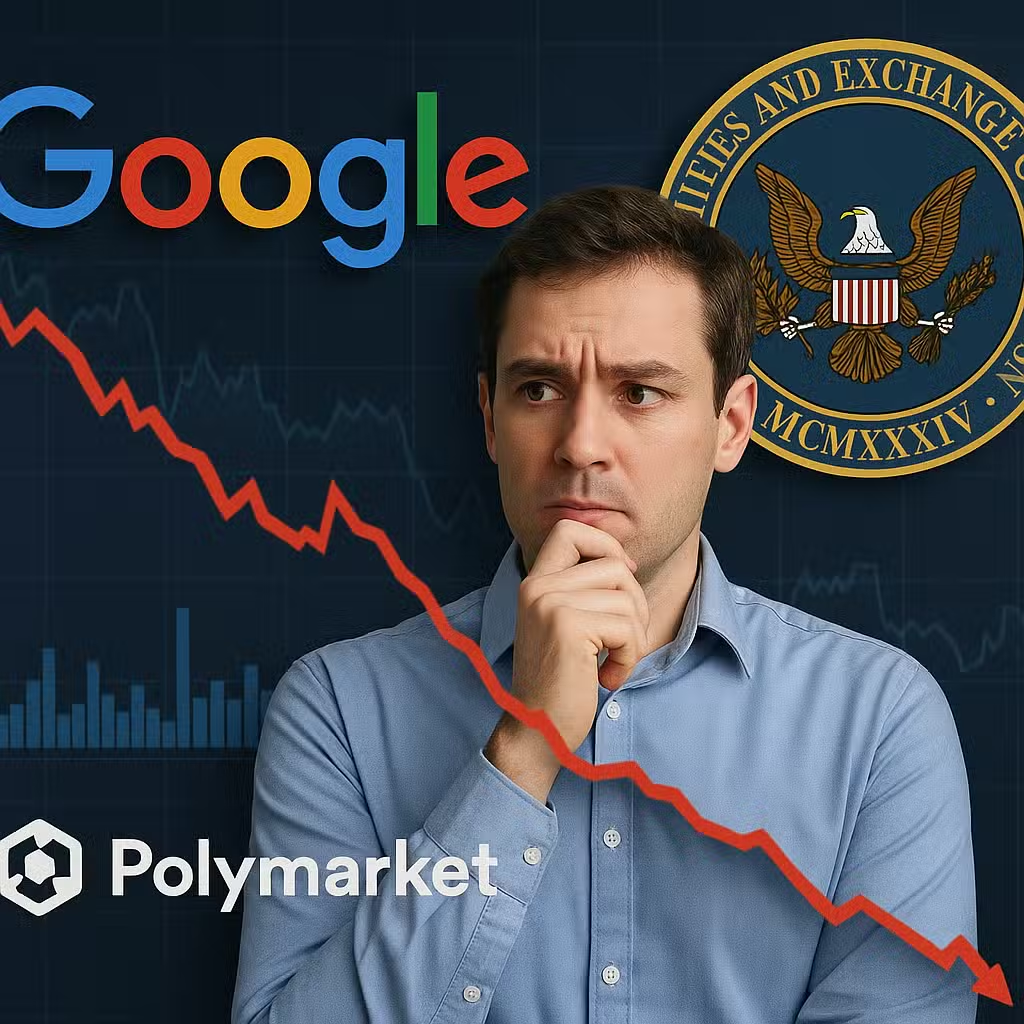
- Fierce Competition: Google’s Waymo and other companies are catching up in self-driving tech.
- Changing Products: Tesla is retiring its popular Model S and focusing on smaller cars that make less money per sale.
What Options Trading Is Telling Us
Options are special trades that let people bet on whether a stock will go up or down. For a long time, most traders were betting Tesla would keep going up. But now, more people are paying extra for “puts,” which are bets that the stock will fall. This is measured by something called the “RiskDex.”
- For the past three years, puts were usually cheaper than calls (bullish signal).
- Now, puts are almost twice as expensive as calls (RiskDex of 1.92), showing traders are more worried about Tesla dropping in price.
- This is the highest level of caution in three years.
When options traders get nervous, it’s often a sign that regular investors should be careful too.
Historical Context and Extra Data
This isn’t the first time a popular stock has gotten ahead of itself. In the early 2000s, tech companies like Cisco and Intel also had sky-high P/E ratios before the dot-com bubble burst. According to The New York Times, high valuations can last a while, but they often end with prices falling back to earth.
Electric vehicle (EV) sales growth is also slowing. A recent IEA report said global EV sales grew only 35% in 2023, down from 60% in 2022. This means the market is still growing, but not as fast as before.
Investor Takeaway
- Don’t ignore warning signs. When options traders get nervous, it’s smart to double-check your own optimism.
- Watch the fundamentals. High P/E ratios can be risky, especially if growth slows.
- Diversify. Don’t put all your money in one stock, even if it’s a superstar like Tesla.
- Keep an eye on policy changes. EV tax credits and other government support can make a big difference for Tesla and other EV makers.
- Stay curious. Read up on competitors and new tech. Sometimes the next big thing surprises everyone.
In short, Tesla’s story is changing. Investors should stay alert, weigh both the risks and rewards, and make sure their portfolios are ready for whatever comes next.
For the full original report, see CNBC