Analysts Highlight Dividend Stocks Offering Reliable Income Opportunities for Investors
Investing is a lot like building a treehouse in a windy backyard—you want strong, steady support even when the weather gets rough. That’s why many investors look for stocks that pay dividends, especially when the stock market feels shaky.
Why Dividend Stocks Matter Now
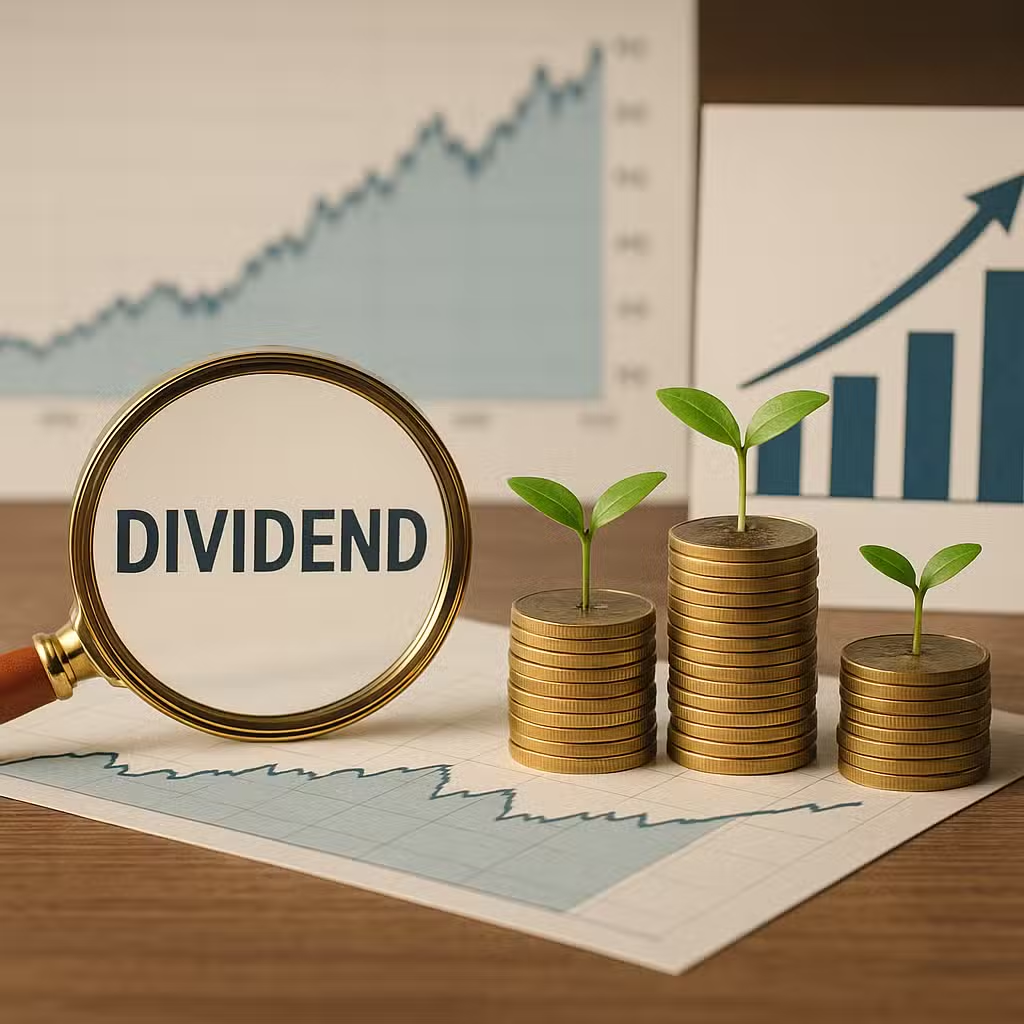
With the stock market bouncing up and down because of tensions in the Middle East, it’s easy to feel uneasy about where to put your money. Dividend stocks can help by giving you regular payments (like rent for owning a piece of a company), plus the chance for your investment to grow over time. This can make your portfolio sturdier, especially when other stocks are unpredictable.
The Bull Case: Why Analysts Like These Dividend Stocks
- Reliable Income: Dividend stocks pay you cash, even if their price doesn’t go up. This can help investors ride out tough times.
- Expert Picks: Wall Street’s top analysts study these companies closely, looking at everything from oil prices to restaurant sales. Their recommendations come after lots of research.
- Growth Potential: Good dividend stocks don’t just pay you now—they often have room to grow, which means your investment could be worth more later.
Let’s look at three companies that experts are recommending right now:
- Diamondback Energy (FANG): This company drills for oil and gas in Texas and just paid a $1.05 per share dividend. The yield is around 2%. Analyst Neil Mehta from Goldman Sachs thinks Diamondback and similar companies could give investors a 22% total return, thanks to their low costs and smart management. See more on TipRanks.
- Crescent Energy (CRGY): Crescent works in several big oil regions and pays a 3.5% dividend. JPMorgan’s Zach Parham recently upgraded the stock, impressed by Crescent’s ability to buy and sell assets smartly. Even though Crescent has more debt than some rivals, it’s using its cash to pay that down. See more on TipRanks.
- Darden Restaurants (DRI): You might know Darden from Olive Garden or LongHorn Steakhouse. Darden pays a $1.50 quarterly dividend, or about 3.1% a year. Despite higher costs, sales are strong, and experts like Nick Setyan at Mizuho see more growth coming, especially at LongHorn. See more on TipRanks.
These analysts have solid track records, with most of their stock picks delivering double-digit average returns, according to TipRanks.
The Bear Case: What Could Go Wrong?
- Oil Price Swings: For Diamondback and Crescent, profits depend on oil and gas prices, which can change fast with world events.
- Debt Risks: Crescent took on extra debt to buy new assets. If oil prices drop, paying that debt could get harder.
- Consumer Slowdowns: Darden’s restaurants could see fewer diners if inflation stays high or the economy slows down, making it harder to keep raising dividends.
- Dividend Cuts: Companies sometimes lower dividends if they need to save cash. Historically, about 3% of S&P 500 companies cut or suspend their dividends in any given year (S&P Global report).
How Do Dividend Stocks Compare to the Past?
Dividend stocks have helped investors weather storms before. For example, during the 2008 financial crisis, companies in the S&P 500 that paid dividends outperformed those that didn’t by about 8% per year over the next decade (Schroders study). That’s why they’re a popular choice when markets get rocky.
Investor Takeaway
- Look for solid dividend payers in sectors you understand—energy and restaurants are two options right now.
- Check company debt before you invest, especially for energy stocks. Too much debt can make dividends riskier.
- Diversify across different industries to avoid having all your eggs in one basket.
- Pay attention to analyst ratings and track records, but always do your own homework.
- Remember that dividends aren’t guaranteed—companies can change their payouts if business slows down.
For the full original report, see CNBC