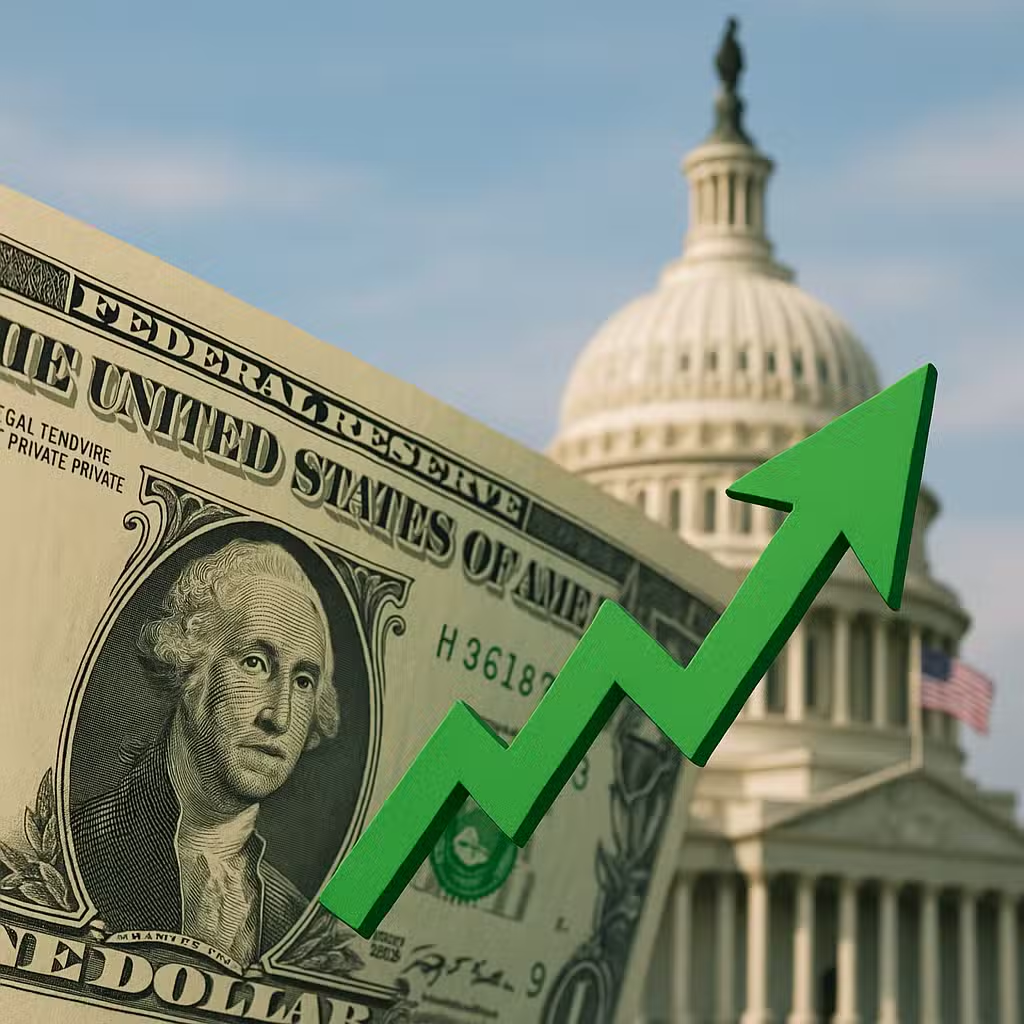
Dow Nears 50,000: What Investors Should Know About Options Strategies at This Milestone
Imagine your favorite sports team swapping out star players for hardworking underdogs who finally get their chance to shine. That’s what’s happening in the stock market right now—and it could really matter for your investments.
What’s Happening in the Market?
Lately, a lot of money is moving out of the biggest, most popular tech stocks—the so-called “Magnificent 7”—and into older, reliable companies in the Dow Jones Industrial Average. This is called the “Great Rotation.” Investors are paying more attention to these blue-chip stocks because they seem safer and might have more room to grow.
Why Investors Care
When the Dow Jones is close to its all-time high (just 2% below $50,000), it shows that people trust the companies in this group. If you own funds or stocks that track the Dow, you may see your portfolio benefit from this trend. Meanwhile, stocks that aren’t in the Magnificent 7 are actually doing better than you might think—if you take out those 7, the rest of the S&P 500 is up nearly 10% this year (Wall Street Journal).
Bulls: Why Some Think the Dow Will Go Higher
- Stronger economy: Even with a recent weak GDP number, U.S. growth is still strong and steady.
- Interest rates may drop: Lower rates usually help stocks go up.
- New trends: Infrastructure, artificial intelligence, and energy production are all getting a boost, helping Dow companies like Caterpillar, Exxon, and Walmart.
- Safer choices: Blue-chip stocks are seen as less risky, especially during uncertain times.
Bears: The Possible Downsides
- Already expensive: The Dow is near record highs, so some investors worry it could be overbought.
- Economic surprises: If the economy slows down more than expected, all stocks—including the Dow—could fall.
- Rotation could reverse: If tech stocks get hot again, money might flow back out of the Dow.
The Strategy: A Simple Call Spread
One way some investors are trying to profit is by using options. For example, buying a call spread on the Dow ETF (DIA) means you think the Dow will go higher, but you limit your risk. Here’s how one investor did it:
- Bought a $495 call (right to buy at $495) for $8.00
- Sold a $500 call (right to sell at $500) for $5.50
- Net cost: $2.50 or $250 per contract
This trade could pay off if the Dow keeps climbing, but the risk is limited to what you paid upfront.
Historical Perspective
Historically, when markets broaden out like this—meaning more stocks are going up instead of just a few—it can be a healthy sign. In the early 2000s, after the dot-com bubble, old-school companies also had a comeback. According to a study from NBER, these shifts have led to sustained rallies before, but not without bumps along the way.
Investor Takeaway
- Look beyond the big names: There’s real opportunity in “forgotten” stocks right now.
- Diversify: Don’t put all your money in tech or in the Dow—spread it out across sectors.
- Think about risk: Blue-chip stocks are safer, but nothing is risk-free at record highs.
- Watch for reversals: Trends can change fast, so stay alert to moves back toward tech or growth stocks.
- Consider simple strategies: Tools like call spreads can limit risk while giving you a chance to benefit if the market keeps climbing.
In times like this, staying flexible and well-informed can help you make the most of market shifts—just like a coach who isn’t afraid to change up the game plan.
For the full original report, see CNBC