S&P 500 Stays Range-Bound: What Sideways Trading Means for Investor Strategy
Imagine watching popcorn in a microwave — nothing happens for a while, then suddenly, everything pops at once. The stock market can work a lot like that, staying quiet and then making a big move. That’s why what’s happening with the S&P 500 right now matters, especially for investors.
What’s Going On With the S&P 500?
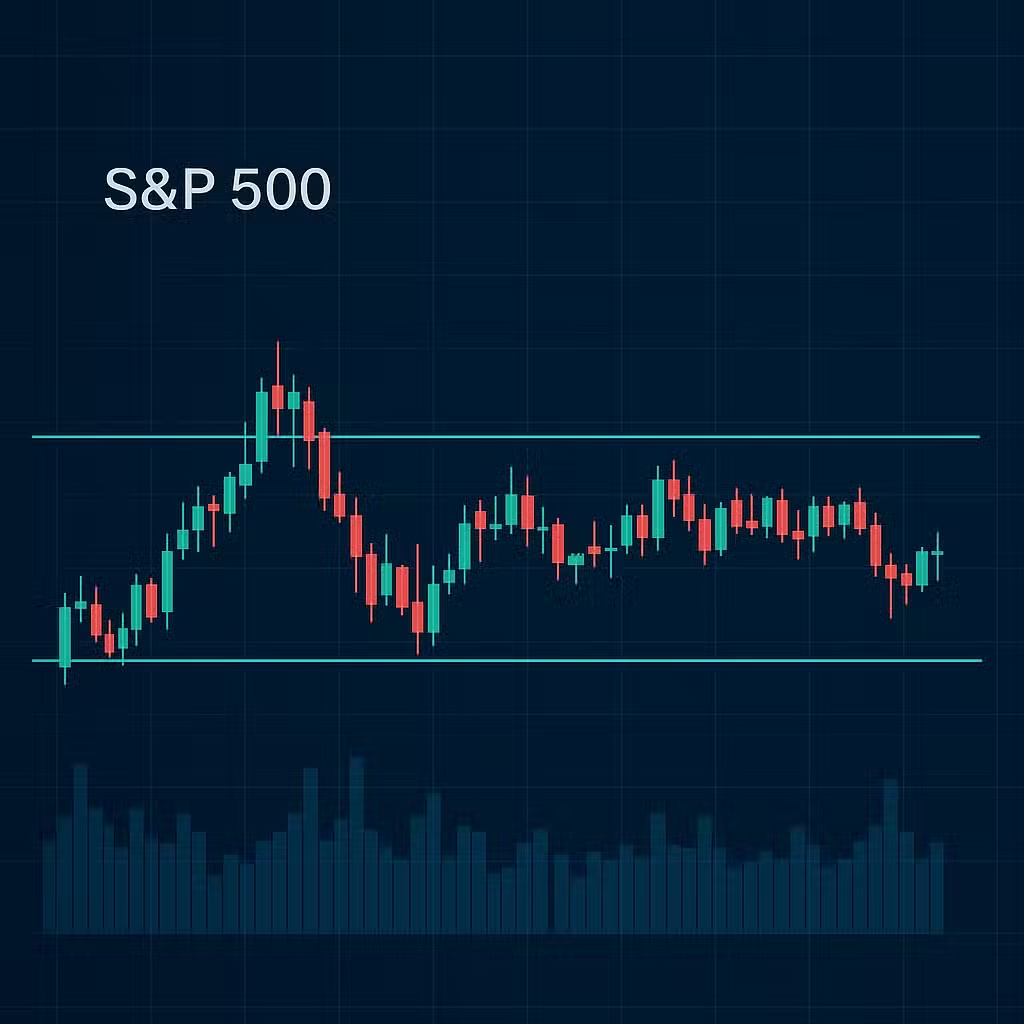
The S&P 500, a basket of 500 big U.S. companies, has been stuck in a “trading box” for over two months. This means it keeps bouncing between two price points, not breaking out higher or falling lower. Investors watch these boxes closely because, when the price finally breaks out, it can lead to a big move up or down — like popcorn finally popping.
The Darvas Box: A Simple, Disciplined Approach
A famous investor named Nicolas Darvas made a fortune by using these boxes. He waited for a stock to move above its box before buying. He called this “buying high and selling higher.” It sounds easy, but it’s tough because people get nervous buying something that already looks expensive. Darvas believed the real trick was having a plan and sticking to it, even when it felt uncomfortable.
- Darvas only bought stocks that broke out of a trading box.
- He set buy orders just above the box and stop-loss orders below it.
- He didn’t guess or hope — he followed his system no matter what.
This approach kept him from making emotional decisions and helped him avoid big losses.
Why This Matters for Investors
Right now, the S&P 500 is stuck in a box. History shows that when this happens, it can lead to frustration, but it also builds up energy for a big move. According to a study by the National Bureau of Economic Research, stock market returns are often higher right after a period of low volatility, like now. This means investors should pay attention, because the next move could be important for portfolios.
Bulls vs. Bears: Both Sides of the Story
- Bulls (Optimists): Some stocks in the S&P 500 are quietly hitting new highs. If the index breaks out above the box, it could mean more gains ahead.
- Bears (Pessimists): Other stocks are dropping, and some sectors have seen sharp declines. If the index falls below the box, it could signal more trouble.
- Under the surface: Even though the S&P 500 looks calm, there’s a lot of action happening with individual stocks. This “hidden rotation” means some parts of the market are strong, while others are weak.
Lessons From History
Darvas didn’t try to predict the market. If his system stopped working, he stepped aside and waited. Back in 1957-58, he noticed his trades weren’t working and stopped buying. Later, he realized he’d avoided a “baby bear market.” This lesson is still true today: Don’t fight the market, and don’t let opinions get in the way of facts.
Markets change, but the basics stay the same. Have a plan, set your risks, and follow your process. Let the market show you what to do — not your emotions.
Investor Takeaway
- Watch for a breakout: If the S&P 500 moves out of its box, be ready to adjust your investments.
- Stick to your plan: Like Darvas, set your rules in advance and follow them, even when it feels tough.
- Use stop-losses: Protect yourself from big losses by deciding in advance when you’ll sell.
- Don’t get fooled by calm: Even if the market looks quiet, there’s a lot going on with individual stocks. Stay alert.
- Let the market guide you: Don’t trade based on opinions or hunches — let the price action lead your decisions.
The market may feel slow now, but just like popcorn, things can pop fast. Stay patient, stay prepared, and remember: the next big move could be just around the corner.
For the full original report, see CNBC