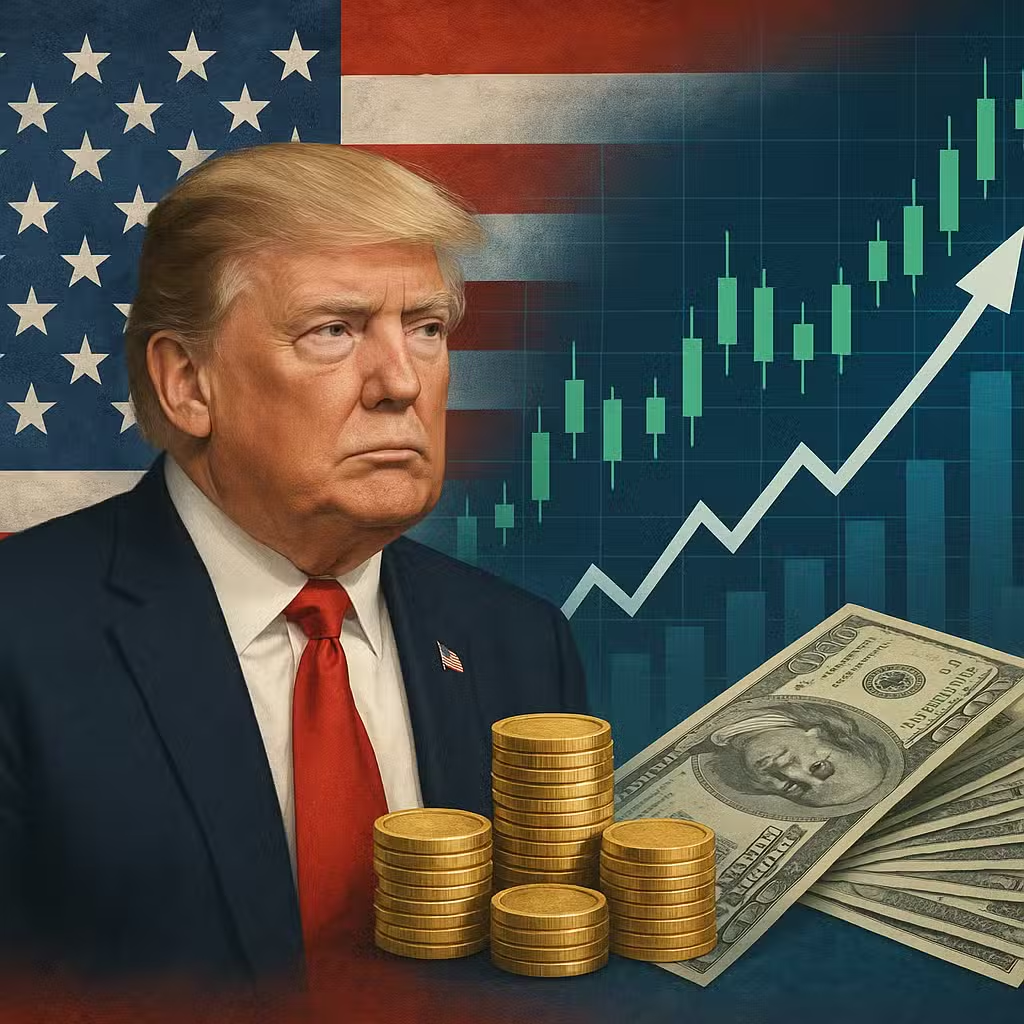
Trump’s Policies Shape U.S. Asset Outlook, Creating New Opportunities and Risks for Investors
Imagine if your favorite sports team suddenly started changing coaches and playbooks every game—you’d never know what to expect. That’s what’s happening with the U.S. and global markets right now, and it matters for your investments.
Why Political Uncertainty Matters for Investors
When countries like the U.S. make big political moves—like threatening new tariffs or changing alliances—it can make markets feel shaky. Investors start wondering if their money is safe, especially in U.S. stocks and the dollar.
Recently, the U.S. has had tense moments with places like Venezuela, Europe, and Canada. There’s even talk about leaving old partnerships behind. Because of this, some investors are looking for opportunities outside the U.S.—and it’s already showing up in the numbers.
- In January, U.S. stocks (S&P 500) grew just over 1%, but emerging markets (EEM) jumped about 8% and international stocks (IDEV) rose over 4%.
- The dollar fell more than 1% in January and is about 11% lower than its recent high.
According to MSCI, global markets often react sharply to political surprises, which can shake up where the biggest gains and losses show up.
Bull Case: Opportunity Beyond the U.S.
- Global Diversification: With the U.S. facing more political risk, investors are exploring stocks in Europe, China, and Japan. These markets can offer growth and are sometimes “on sale” compared to U.S. prices.
- Safe-Haven Assets: When things get rocky, some investors buy gold or other “safe” assets. This can help balance out risk in a portfolio.
- Changing Trade Deals: New agreements—like the EU-India free trade deal—could help non-U.S. companies grow faster.
- Stronger Currencies: If the U.S. dollar keeps dropping, foreign investments might be worth more when converted back to dollars.
Bear Case: Risks and Worries
- Unpredictable Policies: Quick changes in U.S. decisions can spook markets, leading to sudden drops or wild swings.
- Weaker Dollar: If the dollar keeps falling, it could hurt Americans who invest overseas or make imports more expensive.
- Broken Relationships: If old alliances don’t get fixed, trade and security could suffer, hurting companies that rely on global business.
- Fed Independence: Uncertainty about who runs the Federal Reserve could add even more market swings, especially if investors worry about inflation or interest rates.
For example, Danish pension funds increased their hedges on U.S. dollar assets from about 62% to 74% in just a few months in 2025 (Danish Central Bank), showing how quickly big investors can react to risk.
Investor Takeaway
- Don’t Put All Your Eggs in One Basket: Consider adding more international stocks or funds to your portfolio to spread out risk.
- Watch the Dollar: A falling dollar can make global investments more valuable, but it can also mean higher prices at home.
- Stay Calm During Swings: Volatility is normal in uncertain times. Having a plan and sticking to it can help you avoid knee-jerk reactions.
- Keep an Eye on the Fed: Changes at the Federal Reserve can move markets, so pay attention to interest rate news and policy updates.
- Review Your Risk: If you’re worried about big losses, check your mix of stocks, bonds, and safe-haven assets like gold.
Political uncertainty may be the new normal, but with a little planning, you can keep your investments on track—even when the game keeps changing.
For the full original report, see CNBC