S&P 500’s Rapid Climb Signals Caution for Investors Amid Possible Market Turning Point
Imagine playing musical chairs, where everyone rushes to grab a seat when the music stops. That’s a lot like what’s happening in the stock market right now—investors are moving quickly, hoping not to be left standing when the game ends. This matters because how the market moves can impact your investments, just like missing a chair can leave you out of the game.
Why Investors Are Watching the S&P 500 Surge
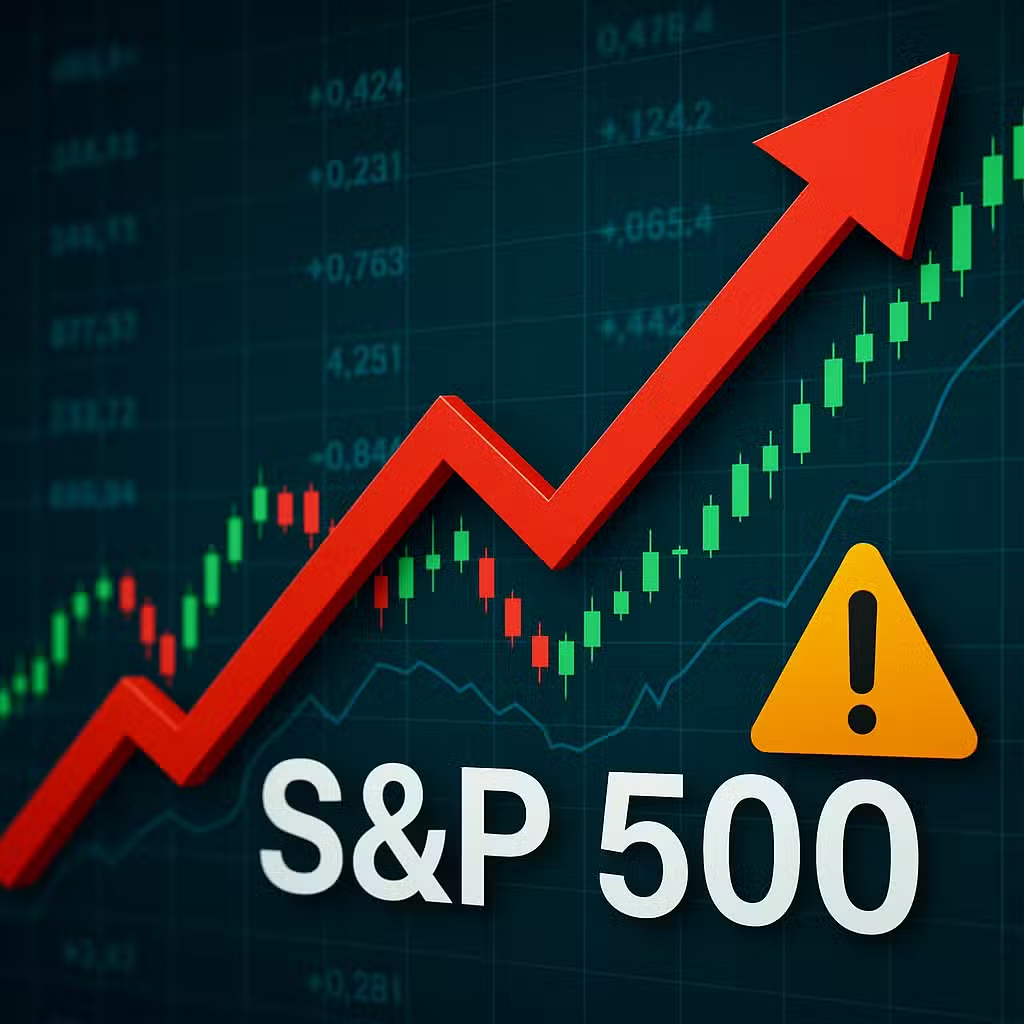
The S&P 500, a group of 500 big U.S. companies, just jumped more than 5% in four days. That’s a pretty big move, and it pushed the index to a new high for the year. This kind of fast climb has only happened three other times in the past 30 years. Some experts are paying close attention because the last few times this happened, the results were mixed.
- In April 1999 and March 2000, the market soon struggled or even fell—March 2000 was right before the dot-com crash.
- In November 2020, the market kept climbing for months, which made investors happy.
So, the big question is: Are we in for more gains, or could trouble be around the corner?
Bull Case: Reasons to Stay Positive
- Sometimes, a strong rally leads to even higher prices, like in late 2020 after the pandemic crash.
- Big tech companies, like Microsoft, have been leading the way, which often pulls the whole market up.
- Over the long run, the S&P 500 has averaged about a 10% gain per year, according to Statista.
Bear Case: Warning Signs from the Past
- Fast, sharp rallies like this have sometimes happened right before big market drops, as in 2000 during the dot-com bubble.
- Microsoft, which just saw its second-biggest four-day jump ever, had a similar move in 2000—right before its stock fell over 60% in the next ten months.
- Some experts, like Michael Burry (famous for predicting the 2008 crash), think we could be near a major market peak, which means prices could fall quickly.
- History shows that when everyone chases the same hot stocks, things can get risky fast. For example, after the 1999 rally, the S&P 500 went sideways for months and even dropped by 10% at one point.
What’s Happening Behind the Scenes?
Right now, investors are moving their money back and forth—from “momentum” stocks (fast-growing companies) to “value” stocks (steady, established companies), and then back again. It’s a bit like shifting from one chair to another, hoping to always find a seat. But if everyone tries to sit at once, some might be left out.
This kind of back-and-forth can make the market feel jumpy and uncertain. According to a study by the National Bureau of Economic Research, sharp rallies followed by quick drops are common in market bubbles, and they often catch investors by surprise.
Investor Takeaway
- Don’t chase big rallies: Just because stocks are jumping doesn’t mean they’ll keep going up. Be careful about buying in after a big surge.
- Keep your portfolio balanced: Make sure you own a mix of different types of stocks, so you’re not caught off guard if one sector falls.
- Watch for warning signs: If experts are comparing today to past bubbles, it’s smart to stay alert and maybe take some profits off the table.
- Think long term: Remember that markets go up and down. If you’re investing for years, you don’t need to react to every swing.
- Stay informed: Keep an eye on what’s happening in the market and learn from history. That way, you’ll be ready no matter what comes next.
For the full original report, see CNBC