Low Trading Volumes in Prediction Markets May Limit Investor Opportunities and Liquidity
Imagine you’re at a big school fair with tons of different games, but most of the booths have hardly anyone playing. That’s kind of what’s happening with prediction markets like Polymarket and Kalshi right now—lots of options, but not many people at each one. Why does this matter for investors? Because where people are playing (or not playing) can show us where there’s real opportunity—or real risk—in these new markets.
What Are Prediction Markets?
Prediction markets are online places where people bet on the outcome of events, like elections or sports games. Think of them like a giant guessing game, but with money involved. The more people play, the more money moves around, and the more accurate the guesses can be.
Why This News Matters for Investors
For investors, prediction markets offer a new way to try and predict the future—and maybe make money doing it. But if most of these markets are “thin” (with not much money or players), that can make things risky. Prices can jump around a lot, and it can be hard to get in or out of a bet without losing money.
The Good: Bullish Side of Prediction Markets
- Big Growth: Overall, prediction market volume is growing fast, especially around big events like the 2024 U.S. election.
- Quick Decisions: Short-term markets, lasting about a week, attract more players and higher volume. These often focus on hot topics like major political events or big names like Elon Musk.
- Potential for Accurate Signals: When lots of people are involved, the “wisdom of the crowd” can lead to surprisingly accurate predictions. A study in Nature found that well-run prediction markets can even outperform expert forecasts in some cases.
The Bad: Bearish Side and Risks
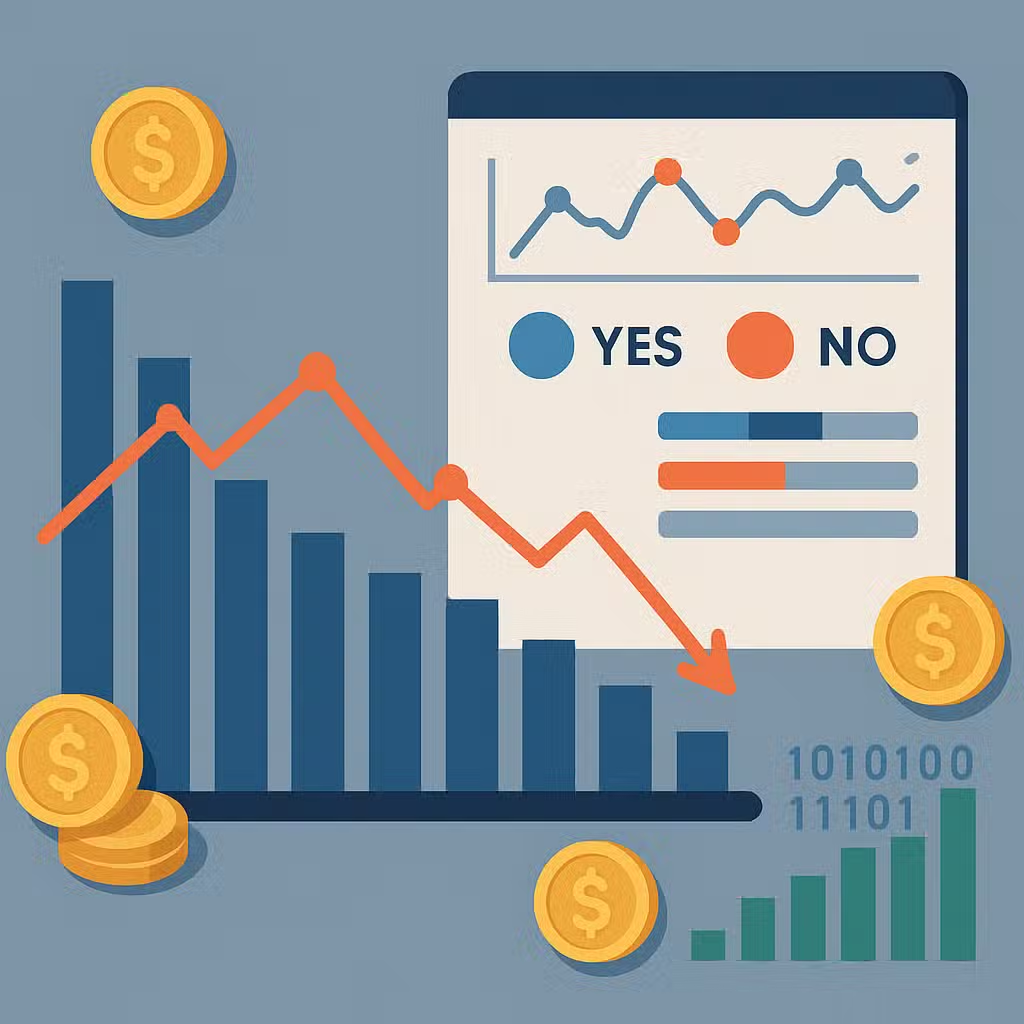
- Low Volume: About 70% of Polymarket’s closed markets saw less than $10,000 in bets. Nearly 5% had no bets at all.
- Volatility: In thin markets, prices can change a lot with just a little money. This makes it risky, especially for new or smaller investors.
- Bots Dominate: More than 80% of trades in these small markets come from bots—computer programs making trades automatically. Bots made over $1.2 million in low-volume markets, but regular people often lost money.
- Accuracy Concerns: High-volume markets tend to be more reliable. Only 8% of markets on Polymarket and Kalshi ever hit $1 million in bets, which means most markets might not be giving the best signals.
- Wide Spreads: With fewer people trading, the difference between buying and selling prices can get big. This makes trades more expensive and risky.
What Experts Say
Some experts think that low-volume markets are less reliable, but not useless. If skilled traders are still playing, even thin markets can be accurate. But most agree that more money and more people make for better predictions.
According to Brookings Institution research, prediction markets work best when there’s high participation and transparency. Otherwise, the information they give might not be very helpful for investors.
What About the Future?
Experts expect the big, popular markets to keep growing while the smaller ones stay quiet. For investors, the key is knowing where the action really is—and being aware of the risks when there isn’t much volume.
As Rutgers professor Harry Crane says, “Protect yourself at all times.” Each investor needs to look out for their own interests and understand the risks of thinly traded markets.
Investor Takeaway
- Stick to Big Markets: If you want to try prediction markets, focus on the ones with lots of money and players. They’re usually more stable and reliable.
- Watch Out for Bots: Remember, in small markets, you might be trading against bots that are much faster and smarter than most people.
- Expect Volatility: Thin markets can have wild price swings. Only invest what you can afford to lose.
- Look for Short-Term Opportunities: Markets that wrap up quickly, especially around big news events, often have the most action and best chances for fair pricing.
- Do Your Homework: Check the volume and number of participants before making a trade. The more people and money involved, the better your chances.
For the full original report, see CNBC