Citrini Research Reviews Strait of Hormuz Risks, Highlights Key Impacts for Investors
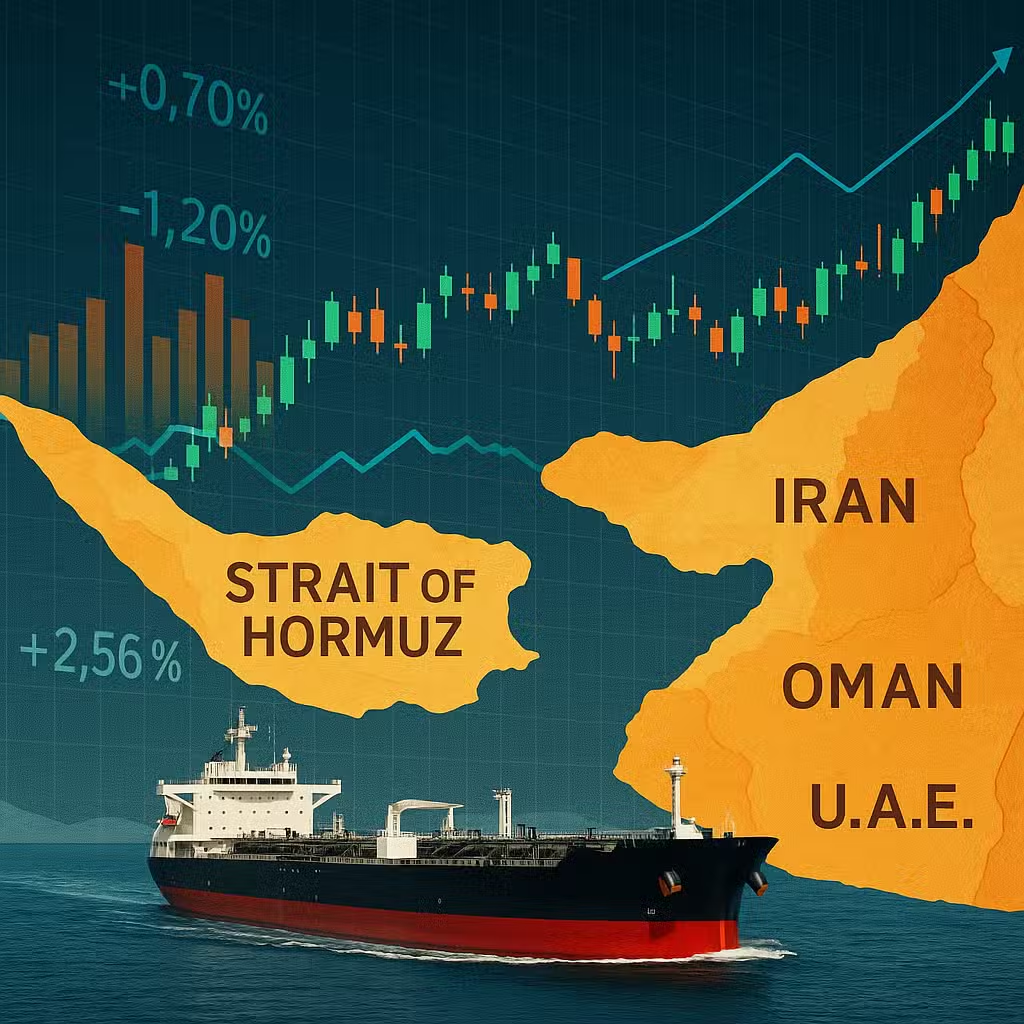
Imagine a busy highway suddenly getting some roadblocks—cars can still get through, but it takes longer and feels riskier. That’s what’s happening right now with the Strait of Hormuz, a crucial waterway for the world’s oil supply.
What’s Going On in the Strait of Hormuz?
The Strait of Hormuz is like a superhighway for oil ships, connecting the Persian Gulf to the Arabian Sea. Recently, there have been worries that rising tensions between Iran and the U.S. might shut down this route, making oil prices shoot up.
But a research company called Citrini Research did something unusual: instead of just looking at satellite images, they sent an analyst right to the scene. This person traveled by boat near Oman to see what’s really happening with the ships.
What Did They Find?
- Ships are still moving through the strait, but not as many as usual—about 15 ships a day, which is less than normal.
- Some ships are turning off their trackers to avoid attention, so the actual number might be higher.
- Iran is letting some ships pass, but only if they get special approval—like a checkpoint, not a total roadblock.
- Local fishermen and officials say things are tense, but not completely shut down.
This means the situation isn’t as simple as “open or closed.” Instead, it’s changing day by day and ships are finding ways to get through.
Why Does This Matter for Investors?
Oil markets are super sensitive to news about the Strait of Hormuz. If traders think it’s closed, oil prices can skyrocket—like they did in 2019, when attacks on ships in the area made oil jump nearly 5% in one day (Reuters).
If the disruption is only partial, prices may not rise as much, but uncertainty can keep them higher than normal. This creates both risks and opportunities for investors in energy stocks, oil ETFs, or companies that depend on fuel costs.
Bull Case: Reasons to Be Optimistic
- The strait isn’t fully closed, so oil is still getting to market.
- If traffic picks up, oil prices might calm down.
- Companies with flexible supply chains could handle the changes well.
- Some analysts predict up to 50% of normal ship traffic could return in the next month or so.
Bear Case: Reasons to Be Cautious
- Even partial slowdowns can keep oil prices high, hurting airlines, shippers, and some consumers.
- The risk of a sudden total closure is still there, and could make prices spike fast.
- Uncertainty may mean higher costs for insurance and shipping.
- The situation is based on limited, hard-to-check reports, so surprises are possible.
Investor Takeaway
- Keep an eye on oil prices and news from the Strait of Hormuz; things can change quickly.
- Diversify your portfolio—don’t bet everything on oil or a single sector.
- If you invest in energy, consider both short-term price swings and the long-term trend of higher “risk premiums.”
- Look for companies with strong supply chains or ways to manage higher costs.
- Stay calm and avoid reacting to every headline—partial disruptions are tricky, but not the end of the world.
Just like watching traffic on a highway, it’s smart to pay attention to what’s really happening—not just what you hear on the news. The Strait of Hormuz matters for oil and markets everywhere, so keep it on your radar.
For the full original report, see CNBC