Ray Dalio Sees Debt Risks Rising, Recommends Gold and Bitcoin as Investor Safeguards
Think of the U.S. government’s finances like a family that keeps borrowing more money than it earns. If they don’t change their habits, eventually the bills pile up and it gets harder to pay them back. That’s why this week’s news about the government buying back its own debt is a big deal for investors.
What’s Happening?
Ray Dalio, a well-known investor, says the U.S. government’s plan to buy back its own bonds is a warning sign. The Treasury Secretary, Scott Bessent, announced the government will spend billions to buy back debt. At the same time, other countries like Japan are pulling back from U.S. bonds, and interest rates on long-term U.S. bonds are rising.
Dalio thinks these moves could mean trouble ahead for the U.S. economy, and that investors should get ready for more risk in the markets.
Why Investors Should Care
When the government borrows a lot and spends more than it earns, it creates a bigger budget deficit. That can make bond markets jumpy and cause interest rates to go up. If rates climb, it can hurt stocks and make borrowing more expensive for everyone—including companies and families.
Fact: In July, the U.S. budget deficit reached $432 billion. Historically, high deficits have made markets nervous and sometimes led to downturns. For example, after the 2011 U.S. debt ceiling crisis, the S&P 500 dropped nearly 17% in three weeks (source).
The Bull Case: Reasons for Optimism
- Government Action: Officials are trying to address the deficit by buying back debt and looking for ways to cut spending.
- U.S. Still Strong: The U.S. economy is not in a recession, and there’s time to fix things before a real crisis hits.
- Market Resilience: U.S. stocks and bonds have bounced back from scares before, showing they can handle stress.
The Bear Case: What Could Go Wrong
- Debt Snowball: Dalio warns that U.S. debt is now about twice as big as the government’s yearly income. If nothing changes, paying it back will get harder and costlier.
- Limited Options: Dalio says there’s not much room to cut spending or raise taxes because so much of the budget is already committed.
- Rising Yields: Higher interest rates make debt payments even bigger, which can squeeze the government and hurt stocks.
- Foreign Pullback: Countries like Japan are buying fewer U.S. bonds, which could make it harder to borrow cheaply.
Dalio’s Three-Part Solution
Dalio says there are three ways to get the deficit under control:
- Reduce government spending.
- Raise more tax revenue.
- Lower interest rates, but not by forcing them down unnaturally.
He warns that if any one of these is pushed too hard, it could shock the economy. The best approach is to make small changes in all three areas at once.
How to Prepare: Dalio’s Advice
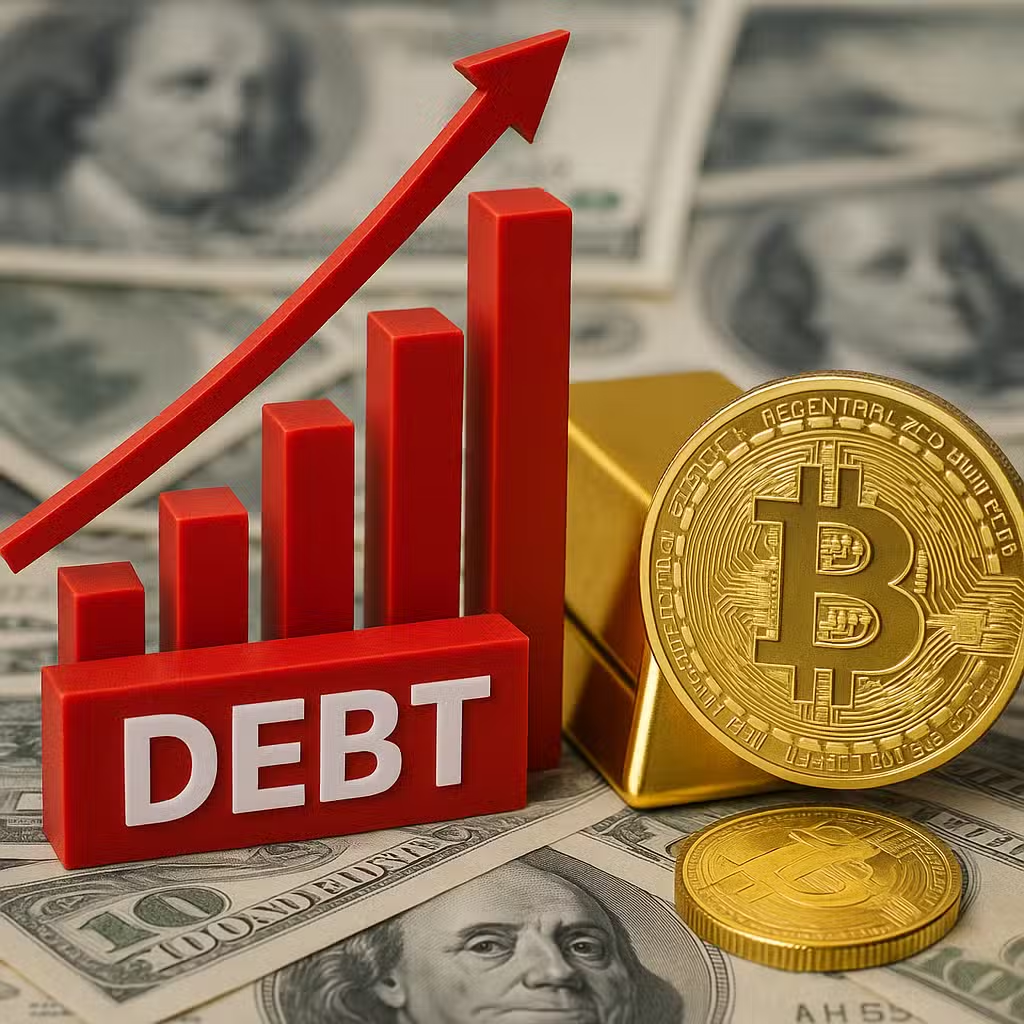
Dalio suggests investors should own less debt (like U.S. bonds) right now. Instead, he recommends putting 10% to 15% of your portfolio in gold and “a bit” in bitcoin. These assets can act like a safety net if the dollar weakens or markets get rocky.
Historical Perspective
Big deficits and debt scares aren’t new. In the early 1980s, the U.S. faced high interest rates and deficits, but managed to recover by making tough choices. However, in 2011, a debt ceiling fight led to a credit downgrade for the U.S. and a big drop in the stock market (source).
Dalio thinks the next crisis could come in one to five years unless things change soon.
Investor Takeaway
- Check your portfolio’s bond exposure: Consider owning fewer long-term U.S. bonds if you’re worried about rising rates or debt risks.
- Diversify with gold and bitcoin: Dalio suggests putting up to 10–15% in gold and a little in bitcoin as a hedge against trouble.
- Watch government actions: Pay attention to news about spending cuts, tax changes, and interest rates—they can move markets quickly.
- Don’t panic, but stay alert: Big market swings can happen, but balanced portfolios and a cool head usually win in the long run.
- Review your risk: If you’re close to retirement or can’t handle big losses, now is a good time to make sure your investments match your comfort level.
For the full original report, see CNBC