Michael Burry Bets Against Caterpillar After AI Rally—Key Signal for Value Investors
Imagine if everyone in your town started buying up one kind of toy, making it super expensive—even if it’s not that special. That’s kind of what’s happening in the stock market right now, and famous investor Michael Burry thinks it might be time to be careful.
Why This News Matters for Investors
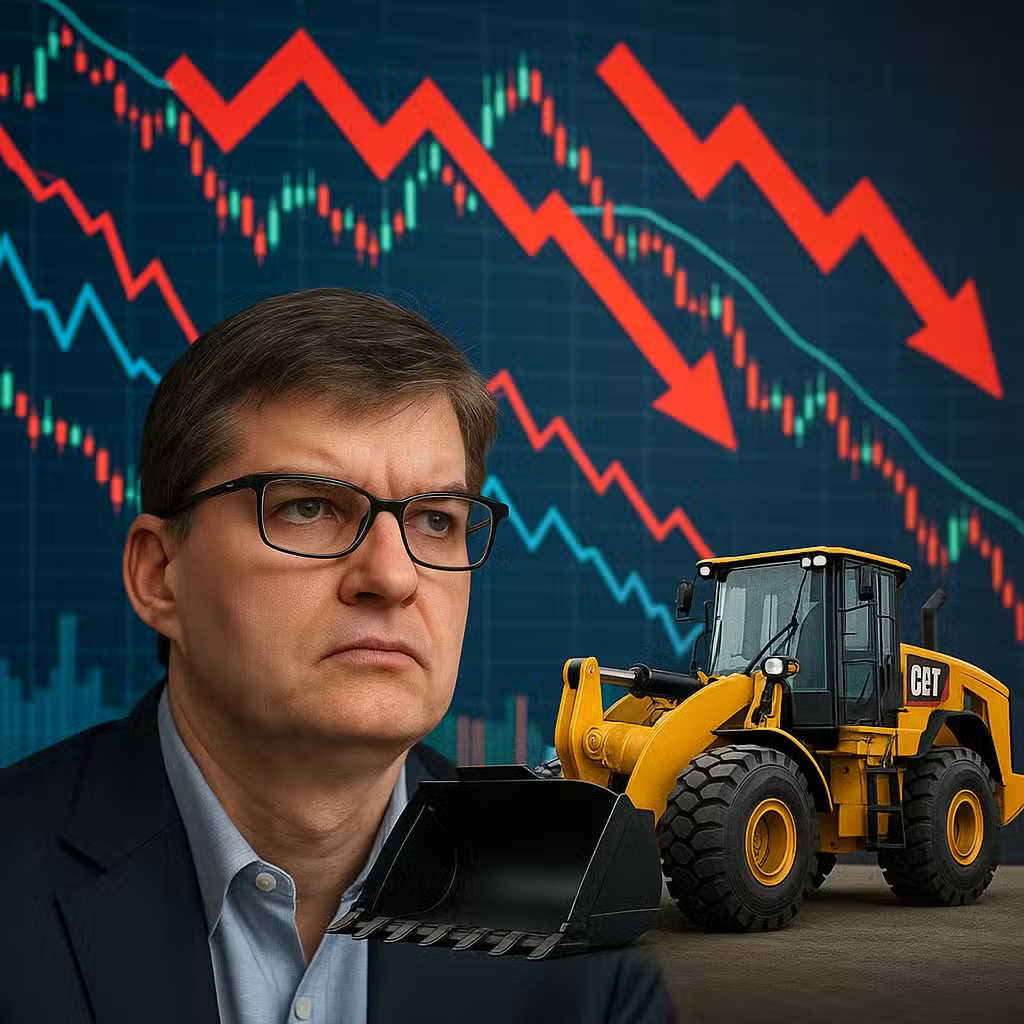
Michael Burry, who became famous for predicting the 2008 housing crash, just bet against some of the most popular stocks—like Caterpillar, Nvidia, Applied Materials, Tesla, and a big semiconductor fund. He thinks these companies are now too expensive because investors are excited about artificial intelligence (AI), and that the excitement might be overdone.
For investors, this matters because when stocks get too pricey, they can fall quickly if people change their minds. If you own these stocks or funds, it’s important to know what’s happening and why some experts are worried.
Bulls: Why People Are Excited
- Big Gains: Caterpillar’s stock went up 86% in just six months, making it one of the best performers in the S&P 500 this year.
- AI Boom: Many investors believe these companies will keep growing as AI becomes more important in building new technology and infrastructure.
- Strong Demand: There’s a lot of spending worldwide—especially in places like Korea—on new technology, which helps these companies.
Bears: Why Some, Like Burry, Are Worried
- Too Expensive: Caterpillar’s price compared to its sales is the highest it’s been in at least 30 years. That’s a warning sign that the stock might not be worth the price.
- Bubble Fears: The Philadelphia Semiconductor Index is trading 65% above its 200-day average. The last time it was this far above normal was during the dot-com bubble in 2000, which ended badly for investors (Investopedia).
- History Repeats: Burry points out that big spending and high prices often mean a rally is near its end, not the beginning.
What the Numbers Say
According to S&P Global, the average price-to-sales ratio for S&P 500 companies is much lower than Caterpillar’s recent high. When stocks get this expensive compared to their sales, they often struggle to keep rising.
During the dot-com bubble, technology stocks soared for a few years before falling 78% from their peaks between 2000 and 2002 (Nasdaq).
Investor Takeaway
- Check Your Exposure: If you own a lot of AI, semiconductor, or industrial stocks, look at how much risk you have if prices drop.
- Don’t Chase Hype: Just because a stock is going up fast doesn’t mean it can’t come down just as quickly.
- Diversify: Spread your money across different industries and types of investments so you’re not betting everything on one trend.
- Watch Valuations: When a stock’s price is much higher than its sales or earnings, be extra careful—it might be overvalued.
- Learn from History: Past bubbles show that excitement can lead to big gains—but also big losses. Stay informed and make decisions with both the risks and rewards in mind.
For the full original report, see CNBC