Berkshire Lags S&P 500 Rally, Highlighting Shifting Market Trends for Investors
Imagine you’re watching a race, and your favorite runner—who usually wins—starts falling behind. That’s what’s happening with Berkshire Hathaway’s stock compared to the S&P 500 right now. Let’s break down what this means for investors like you.
Berkshire Hathaway vs. S&P 500: The Current Race
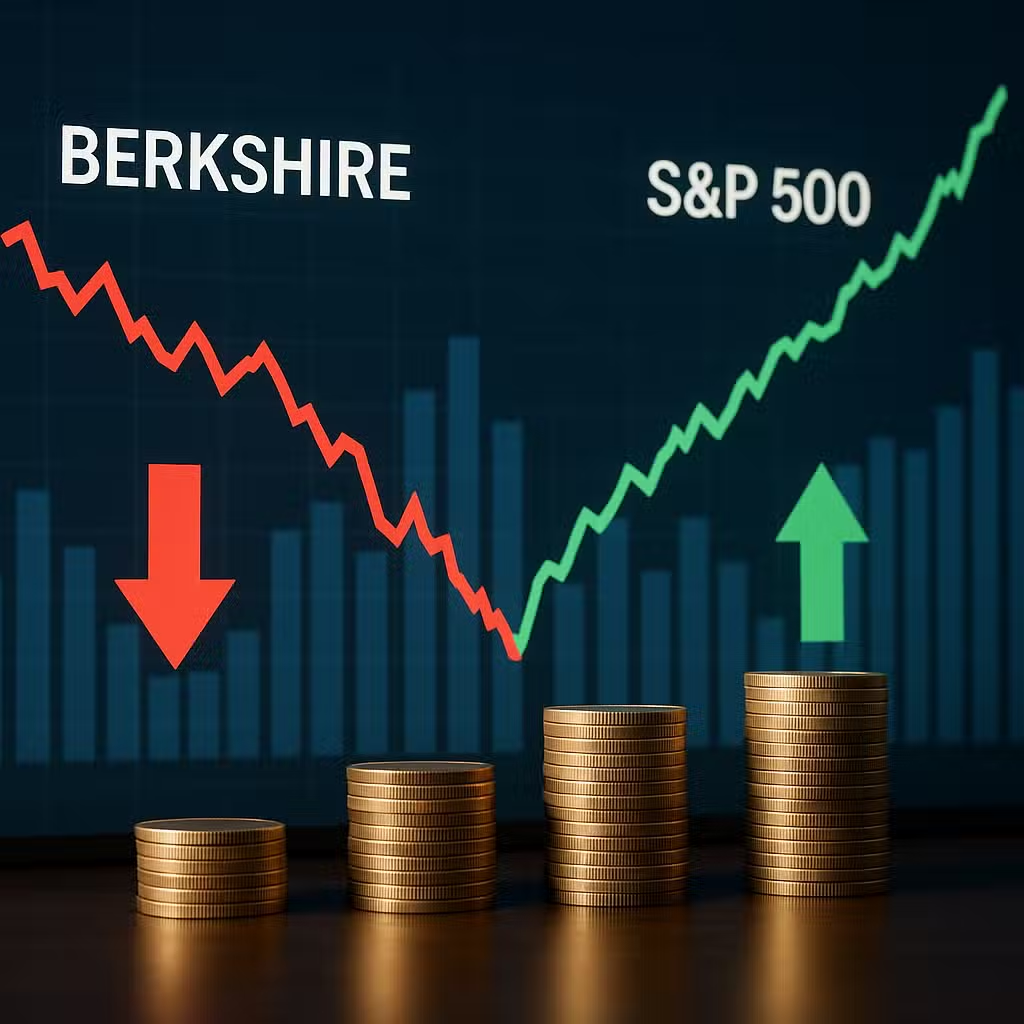
Berkshire Hathaway, the company long led by Warren Buffett, has been a favorite for many investors. But lately, its shares haven’t kept up with the S&P 500, which is a group of 500 big American companies. At the end of March, Berkshire’s stock was down about 4.7% for the year, while the S&P 500 hit a record high.
Just a day before, Berkshire was ahead of the S&P 500 by 1.8 percentage points—its best lead of the year. But by the end of the week, it had fallen behind by nearly 10 percentage points, the biggest gap so far in 2026.
Since Buffett said he would step down as CEO in May 2025, Berkshire’s stock is down about 12%. That’s a tough stretch, even for a company with a long track record of success.
Why Investors Should Care
When a big, steady company like Berkshire stumbles, it matters for investors. Many people use Berkshire as a “safe” part of their stock portfolio. If it lags behind the rest of the market, it can drag down your returns, especially if you own a lot of it or other similar companies.
It’s also a reminder that even the most famous investors and companies go through rough patches. According to a Morningstar analysis, Berkshire has lagged the S&P 500 before—like in the late 1990s tech boom—but often bounced back when trends changed.
Bull Case: Reasons for Optimism
- Strong Balance Sheet: Berkshire has a huge pile of cash—over $373 billion as of December 2025. That means it can buy good companies or weather hard times.
- Diversified Business: Berkshire owns lots of different businesses, from insurance to railroads, which can help it stay steady when some sectors struggle.
- Long-Term Focus: Buffett has always played the long game. Over the past 20 years, Berkshire’s average yearly return is about 10%, close to the S&P 500’s 10.7% (source).
- Potential Value: Some investors think Berkshire is now “cheap” compared to the market, which could mean more upside if sentiment changes.
Bear Case: Reasons to Be Cautious
- Leadership Changes: With Buffett planning to retire, some worry the company won’t be the same without him at the helm.
- Falling Behind Tech: The S&P 500’s recent gains are powered by big tech companies, which Berkshire owns less of. If tech keeps winning, Berkshire might keep lagging.
- Recent Performance: Since its peak in May 2025, Berkshire’s stock is down over 12%, while the market keeps rising.
- Slow Stock Buybacks: Berkshire restarted buying back its own stock in March 2026, but hasn’t said if it continued. Buybacks can help support the stock price, but only if they keep happening.
What About Taxes?
Buffett and his longtime partner Charlie Munger have always said they pay their fair share of U.S. taxes, and don’t try to hide profits overseas. They use tax rules, like credits for wind and solar projects, but believe in playing by the book. That’s part of why many investors trust Berkshire for the long haul.
Quick Stats for Investors
- BRK.A price: About $711,559
- BRK.B price: About $474.58
- Price/Earnings Ratio: 15.29 (shows how much investors pay for each dollar of profit)
- Market Value: Over $1 trillion
- Cash Holdings: $373.3 billion (as of December 2025)
Berkshire’s top stock holdings include big names in both the U.S. and Japan. You can always check the latest list on the CNBC Berkshire Hathaway Portfolio Tracker.
Investor Takeaway
- Check Your Mix: If you own Berkshire, make sure it fits with the rest of your investments. Don’t bet everything on one company, even a big one.
- Think Long Term: Berkshire has bounced back before. If you believe in its approach, patience can pay off.
- Watch for Leadership Updates: Keep an eye on who’s running the show after Buffett steps down—it could affect the company’s direction.
- Consider Diversification: The S&P 500’s gains are coming from tech. If you want more growth, check your exposure to that sector, but remember not to chase trends blindly.
- Stay Informed: Read Buffett’s annual letters for insight, and keep up with company news through trusted sources like CNBC.
For the full original report, see CNBC