Trade Performance Since ‘Liberation Day’: Key Trends and Insights for Investors
Imagine the stock market like a rollercoaster—when a big event happens, the ride gets bumpy, but sometimes, just when you think it’s all downhill, the track smooths out and the ride goes up again. That’s kind of what happened with the “TACO trade” during President Trump’s time in office.
What Is the “TACO Trade”?
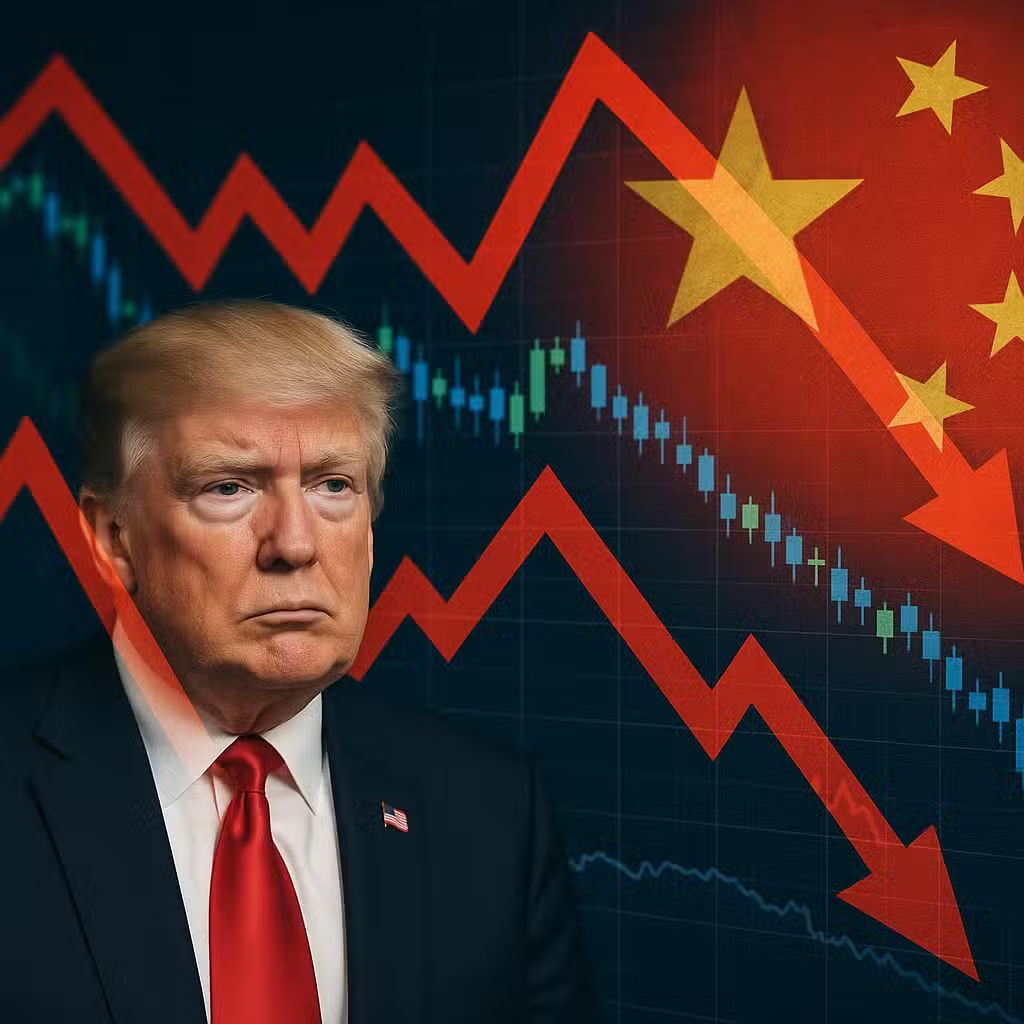
The “TACO trade” stands for “Trump Always Chickens Out.” It’s a nickname investors use for a pattern they noticed: President Trump would make big, scary announcements about things like tariffs or wars, which made the stock market drop. But then, he would often back down or make a deal, and the market would bounce back. Investors learned to “buy the dip”—to buy stocks when prices dropped, expecting them to go up again.
Why Investors Care
This pattern matters because it shows how political news can shake up the market, but also how quick changes can create chances to make money. If you invest in stocks, knowing when to stay calm and when to buy can really help your portfolio.
Bulls: The Upside of the TACO Trade
- Quick rebounds: After Trump’s tariff threats in 2025, the S&P 500 dropped more than 12%—but then jumped almost 10% in one day when he paused the tariffs (Investopedia).
- Opportunities to buy low: Investors who bought after big drops often saw solid gains as the market recovered.
- History repeats: This pattern happened with U.S.-China trade talks, Greenland tariffs, and even during Middle East tensions.
Bears: The Downside and Risks
- Not always a happy ending: Sometimes, after a pause or good news, the market didn’t bounce back as much as before.
- The pattern may be fading: Recent data shows fewer individual investors are jumping in to buy dips, possibly because they’re not sure if the bounce will come.
- Bigger risks with war: When conflicts involve other countries, like Iran, it’s not just up to the U.S. president. The market could stay down longer if solutions are harder to find.
What the Numbers Say
After Trump’s “liberation day” tariff pause, the S&P 500 rallied 9.5% in a single day. But during the seven days after, when China tariffs were still in play, it dropped another 5.4%. Later, when the U.S. and China agreed to suspend most tariffs, the market jumped another 3.3%. This shows the market reacts quickly to both good and bad news, but not always in the same way every time.
According to Statista, the S&P 500 has averaged about 8-10% annual returns since 1945, but years with big political news can see much larger swings—sometimes up, sometimes down.
Lessons from History
This isn’t the first time investors have tried to profit from political uncertainty. In past decades, similar patterns happened during trade wars, oil embargoes, and even government shutdowns. The key lesson: markets can be unpredictable, but they often recover after shocks—though not always in the same way or on the same timeline.
Investor Takeaway
- Don’t panic on bad news. Sometimes the market bounces back quickly after scary headlines, especially if leaders back down or make deals.
- Have a plan for buying dips. If you want to take advantage of drops, decide ahead of time how much you’ll invest and stick to your rules.
- Watch for changing patterns. The “TACO trade” doesn’t work every time. Be careful if fewer investors are buying the dip, or if the situation is more complex (like war).
- Diversify your investments. Don’t bet everything on one event or one sector—spread your money out to lower risk.
- Learn from history. Look at past events to help guide your decisions, but remember that every situation is a little different.
For the full original report, see CNBC