Retail Investors Add XLE and PLTR Amid Market Volatility, Signaling Confidence in Key Sectors
When there’s a big storm coming, some people rush to board up their windows, while others just check the weather and go about their day. That’s kind of what we saw with investors after the U.S. and Israel struck Iran—some rushed to buy certain stocks, while others stayed calm.
What Happened and Why It Matters
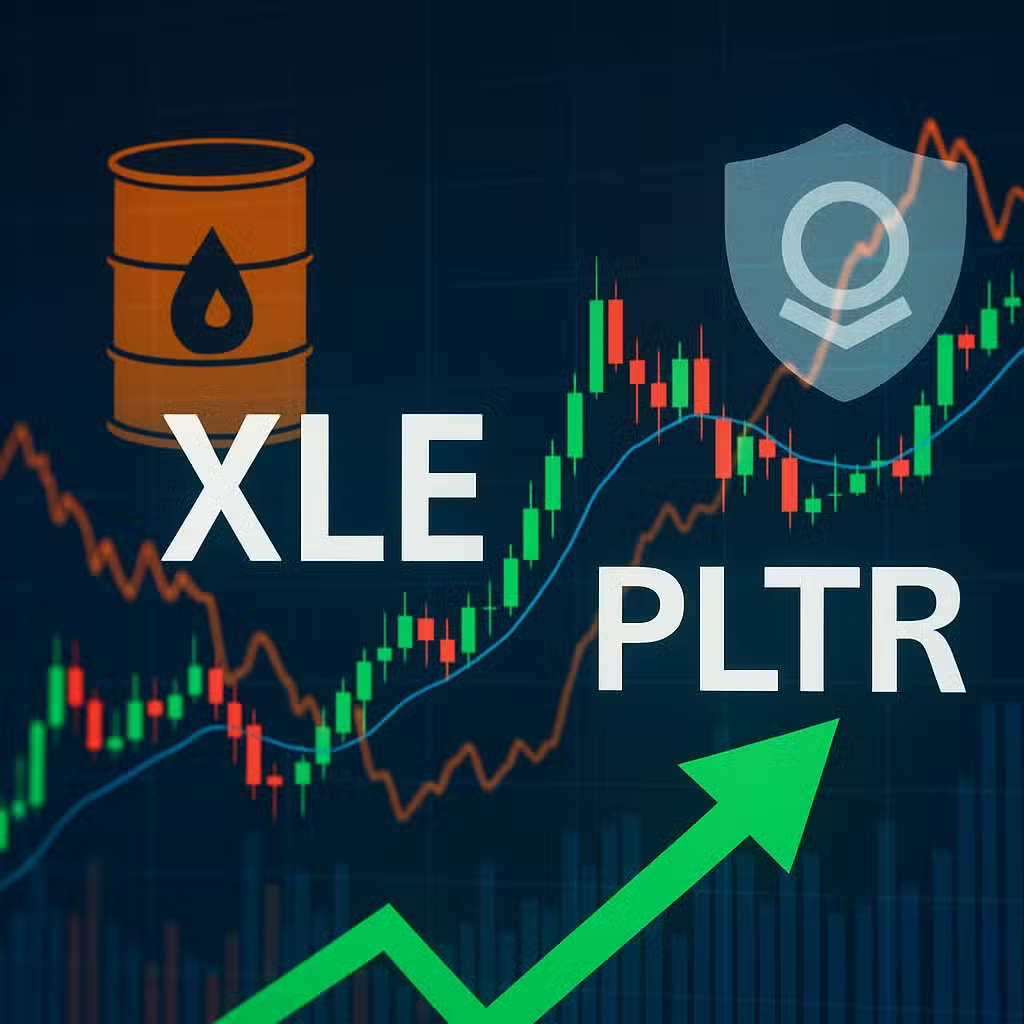
On Monday, after the U.S.-Israeli military action against Iran, many small investors—often called “mom-and-pop” investors—quickly put money into energy and defense stocks. They bought millions of dollars’ worth of the Energy Select Sector SPDR ETF (XLE) and defense tech company Palantir. These moves happened fast, in just the first hour of trading, according to VandaTrack.
But here’s the thing: this wasn’t everyone panicking. It was more like some investors picking out “storm windows” for their portfolios, just in case things got rough.
Why Investors Jumped Into Energy and Defense
- Energy Stocks: When there’s trouble in the Middle East, oil prices often go up because people worry about supply. That’s why XLE, which follows big energy companies, hit a one-year high. Investors bought over $14 million of XLE in just one hour—over 425% more than the same time last Friday.
- Defense Stocks: Palantir, a tech company that works with defense and security, also saw a rush of buys. Over $8 million was invested in Palantir, and its price jumped more than 6% in midday trading. The whole defense sector, measured by the iShares U.S. Aerospace & Defense ETF (ITA), went up more than 2%.
This kind of move isn’t new. After the U.S. struck Venezuela earlier this year, energy stocks saw a similar jump.
What About Other Stocks?
Not all stocks got the same treatment. Nvidia, a big name in tech and artificial intelligence (AI), did see some buying, but much less than usual—down 76% compared to last Friday morning. This shows that investors were less excited about high-risk tech when things felt uncertain.
Even the broad market ETF, the SPDR S&P 500 Trust (SPY), had mixed results. The S&P 500 index was down early, but later turned positive. Investors weren’t just buying everything—they were picking their spots carefully.
Bull Case: Why Some Investors Are Hopeful
- Energy and Defense Strength: When global conflicts threaten oil supplies or increase military spending, companies in these areas can see profits rise. Historically, during the Gulf War, energy stocks outperformed the broader market (NYT, 1990).
- Strategic Hedging: Investors are not panicking, but making thoughtful choices—buying “defensive” stocks to protect against uncertainty.
- Quick Reactions: The speed at which retail investors shifted to energy and defense shows they are paying attention and acting fast.
Bear Case: Why Some Investors Are Wary
- Not a Broad Rally: Most other sectors, especially tech, didn’t get the same boost. Some investors are pulling back from risky bets.
- Uncertainty Ahead: If the conflict grows, markets could get even more volatile, making it hard to predict winners and losers.
- Temporary Moves: Past conflicts have sometimes led to only short-term gains in energy or defense stocks before prices settle down.
- Hedging Signals Fear: The jump in safe-haven assets like short-term Treasury ETFs suggests some investors are worried about bigger drops.
What the Data Says
According to VandaTrack, retail investors had a great year in 2025 by “buying the dip” during market pullbacks. But this time, they aren’t just buying everything. They’re targeting specific areas and even using hedges like the ProShares UltraPro Short QQQ (SQQQ) and ultra-short Treasury ETFs (SGOV).
A study by the Federal Reserve found that when global uncertainty rises, investors often move money into “safe” sectors and away from riskier ones (source).
Investor Takeaway
- Keep an eye on energy and defense stocks—these often move fast when global tensions rise.
- Don’t panic-buy or sell. Instead, look for ways to balance your portfolio with both growth and defensive plays.
- If you want protection, consider some exposure to safe-haven assets like short-term Treasuries.
- Watch for signs that the conflict is calming down or getting worse; markets can swing both ways quickly.
- Remember: history shows that market reactions to geopolitical events can be sharp but short-lived. Stick to your long-term plan, but stay alert for new risks and opportunities.
For the full original report, see CNBC