Ongoing Bitcoin Volatility Signals Cautious Outlook for Investors Through Year-End
Imagine if your favorite video game had a “reset” button that made it harder to win each time you pressed it. That’s a lot like what’s happening with Bitcoin right now, and it’s making investors pay close attention.
Why This Matters for Investors
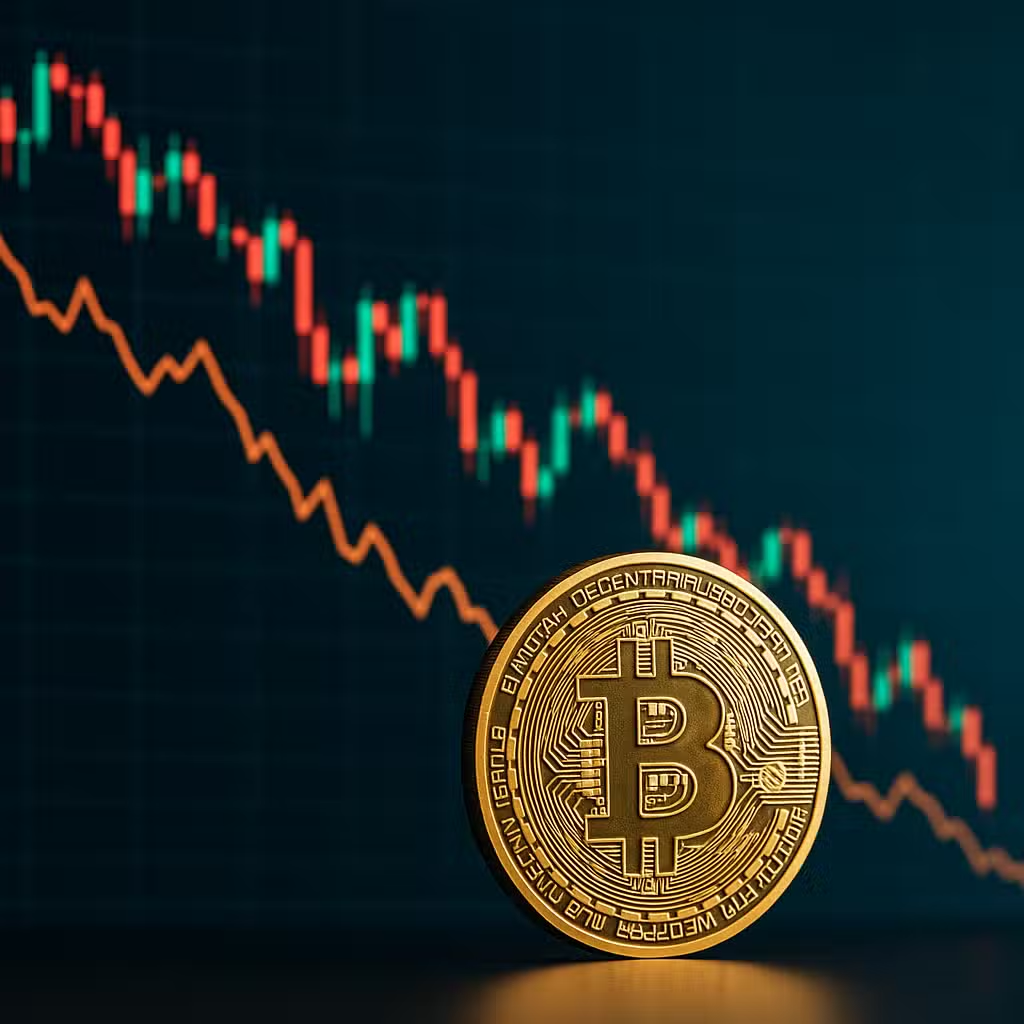
Bitcoin, the biggest and most well-known cryptocurrency, has been dropping in value over the last month. It’s now about 30% lower than its highest price ever, which was just over $126,000 in October. If you own Bitcoin or funds that track it, these moves could affect your portfolio and the wider market.
Why Is Bitcoin Falling?
- Panic Selling: Many new investors bought Bitcoin when prices were high—above $100,000. Now, as prices fall, some are panic-selling to cut their losses.
- Leveraged Trades Unwinding: Some traders borrowed money to buy even more Bitcoin. As the price drops, they’re forced to sell quickly, pushing prices down even further.
- Switching to “Safe” Investments: With the economy sending mixed signals and some tech stocks feeling expensive, people are moving money into safer assets like gold.
- Bitcoin Halving: Every four years, Bitcoin automatically cuts the reward for mining new coins in half. This is supposed to make Bitcoin more rare, but it also causes big price swings. Some long-term holders are selling now because they believe this “halving cycle” predicts what will happen next.
The Bull Case: Reasons for Hope
- Scarcity: The halving makes new Bitcoin harder to get, which could boost prices later on.
- Sticky Holders: History shows that when weak hands sell, stronger holders step in. After previous big sell-offs, Bitcoin prices have often bounced back. For example, after a 45% drop in 2022, Bitcoin doubled in value by the end of 2023 (CoinDesk).
- ETF Support: Exchange-traded funds (ETFs) that track Bitcoin have brought in new investors, which could help steady prices over time.
The Bear Case: Reasons to Be Cautious
- Panic Selling Isn’t Over: If more investors who bought at high prices start selling, Bitcoin could drop further.
- Not Out of the Woods: Some experts, like Compass Point’s Ed Engel, think we haven’t hit the bottom yet. They’re looking for more signs, like more long-term investors buying in and traders betting against Bitcoin, before calling a turnaround.
- Economic Uncertainty: If the economy gets worse or interest rates stay high, people may avoid risky assets like Bitcoin.
What the Data Says
Compass Point notes that Bitcoin recently bounced off $82,000, which is the average price most investors paid this cycle. That’s close to the average price for Bitcoin ETF holders, too. If prices fall below this level, it could trigger even more selling.
According to a study by the National Bureau of Economic Research, Bitcoin’s price is often driven by investor sentiment and big swings in demand, not just the halving cycle. This means prices can move quickly in either direction when emotions run high.
Investor Takeaway
- Stay Calm: Don’t rush to sell just because prices are falling. History shows Bitcoin can bounce back after big drops.
- Watch Key Levels: Keep an eye on the $82,000–$83,000 range. If prices fall below here, more volatility could be ahead.
- Diversify: Don’t put all your money in one basket. Consider spreading your investments across different assets.
- Follow the Data: Use reliable sources and watch for signs like increased buying from long-term holders or changes in ETF flows.
- Think Long-Term: If you believe in Bitcoin’s future, short-term swings may be less important than long-term growth.
For the full original report, see CNBC